Empathize
User Research
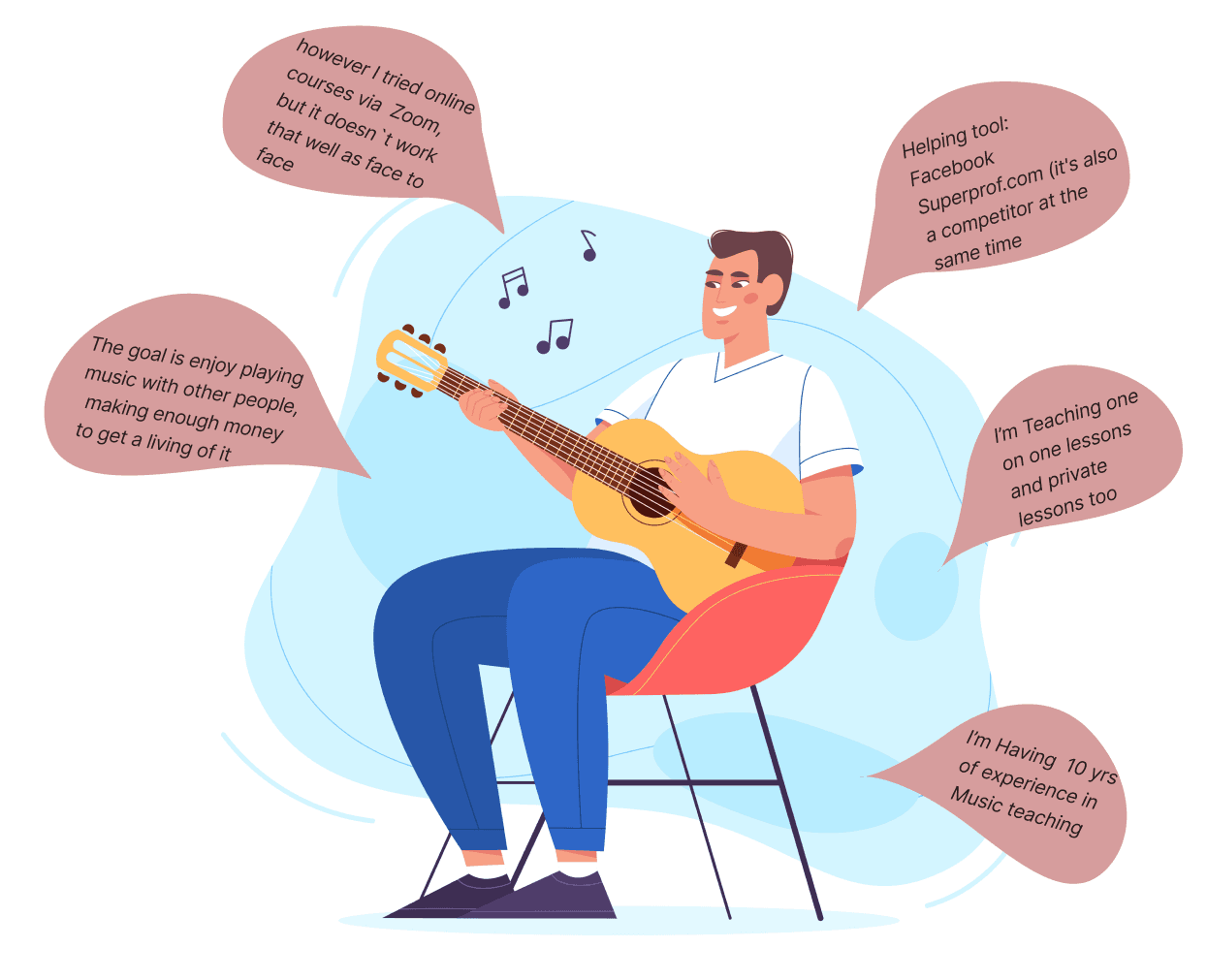
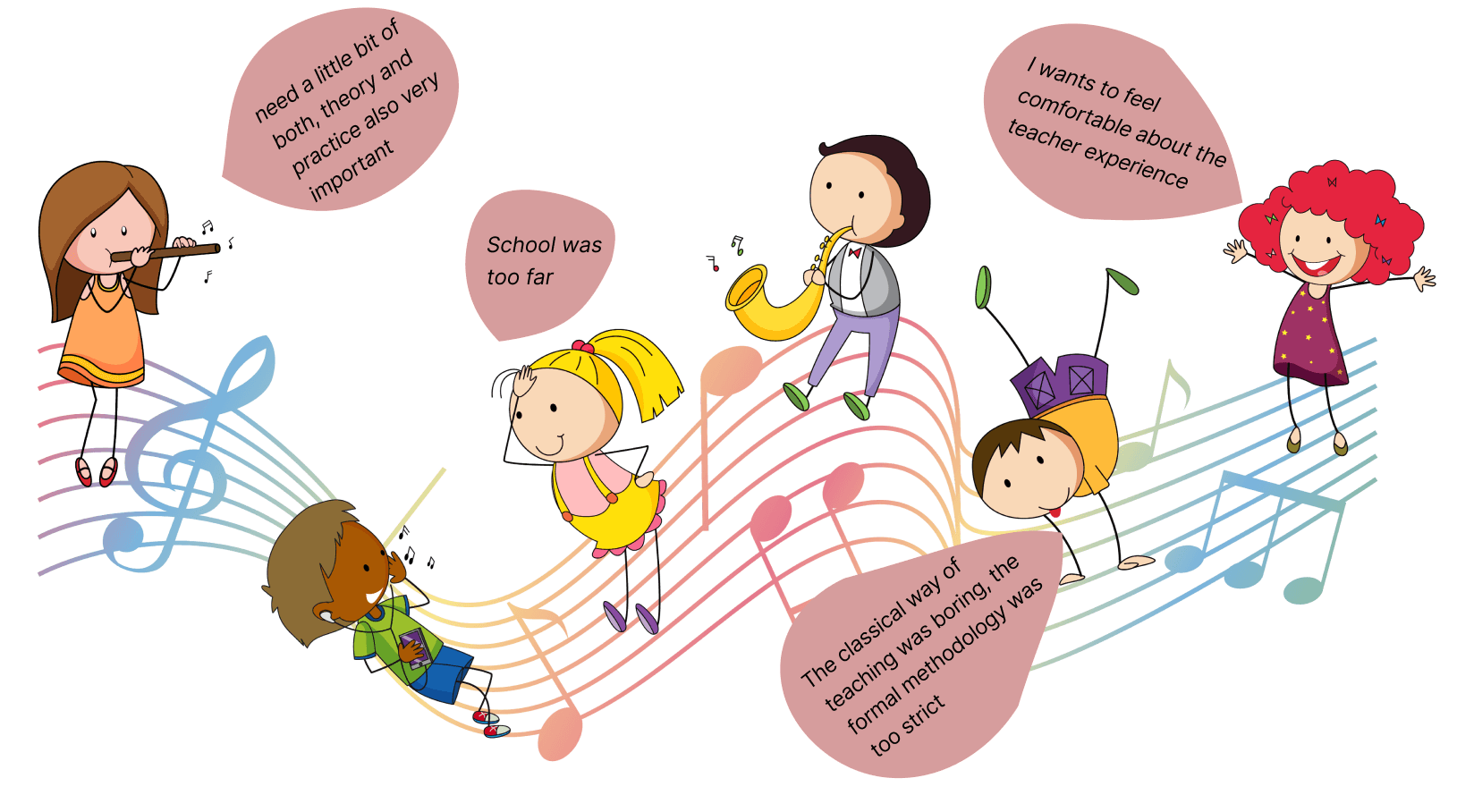
After defining our target user, we focused on brainstorming potential solutions and identifying pain points. To validate our assumptions, we conducted five interviews.
General Information from the Music learned Users:
People practiced the piano, guitar, bass guitar, flute, violin, and accordion.
Majority of them studied at music schools, but there are also people who had a private tutor.
Most of them played as kids or teenagers and some of them starting practicing on their own.
User Persona
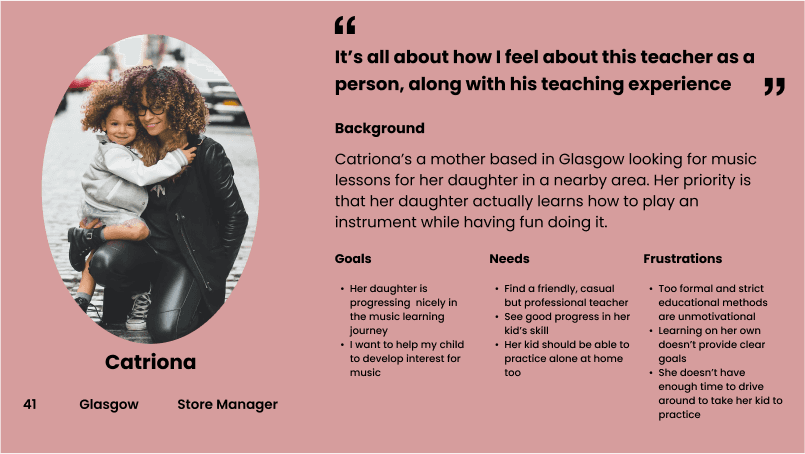
We created a user persona aa a parent looking for music lessons for her daughter in a nearby area. Her priority is that her daughter actually learns how to play an instrument while having fun doing it.
Her goal is to develop interest for music and her daughter is progressing nicely in the music learning journey.
Her potential pain point is she does have enough time to drive around to take her kid to practice.
Define
Problem Statement
Busy parents need to find a kid-friendly and interactive way for their kids to learn music because traditional teaching methods don’t motivate them and they get lost while learning by themselves.
User Journey
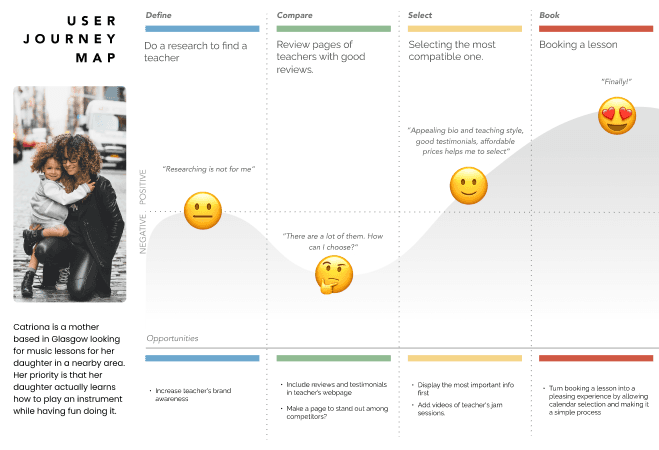
We created our user journey from Catriona with it. We can gain more insight into how she is gonna interact with our website and what she might find helpful or frustrating and then we can formulate the HMW for this phase.
Maria's user journey is divided into 4 phases from Define, to Compare and Selecting the more compatible, finally she decided to book.
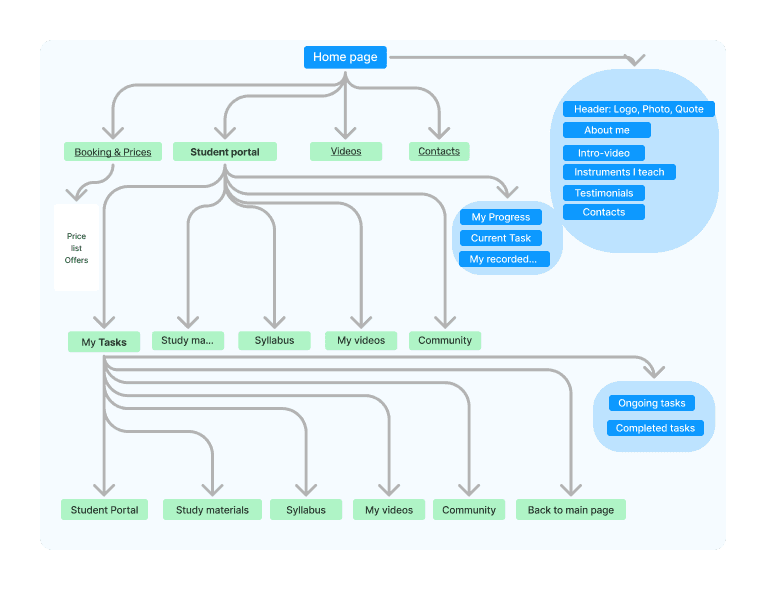
Information Architecture:Sitemap
Our next step involved crafting the user flow to visualize the website’s navigation. As a team, we opted for a user flow that outlines the complete journey of a busy parent have look on student portal and see the kids progress.
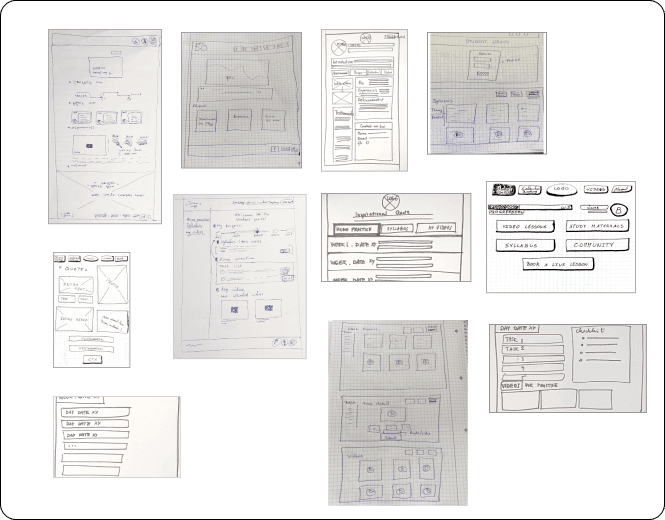
Concept Sketch
Next step for sketching our ideas.
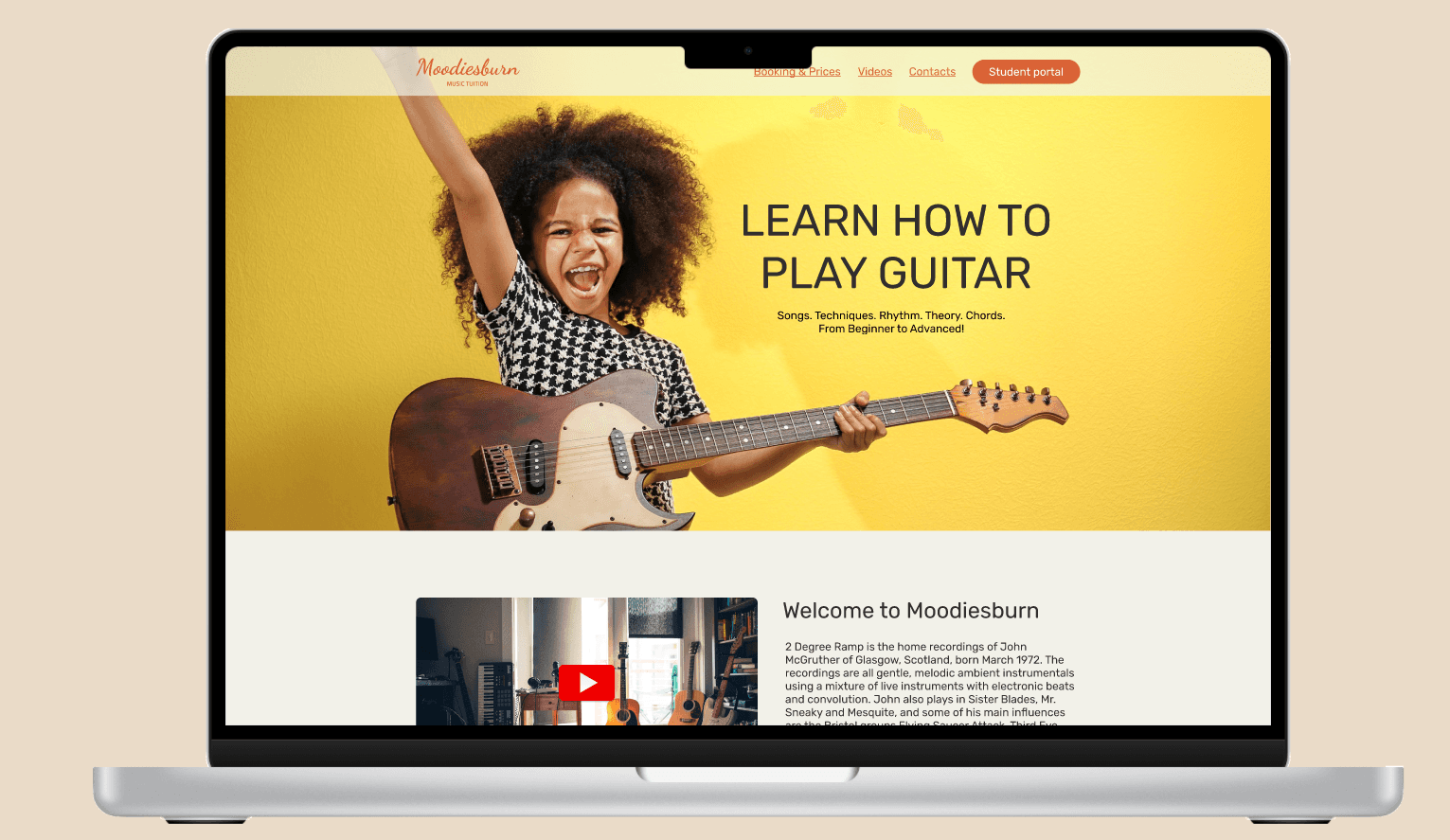
HomePage: Info aabout teacher, testimonials and contact details
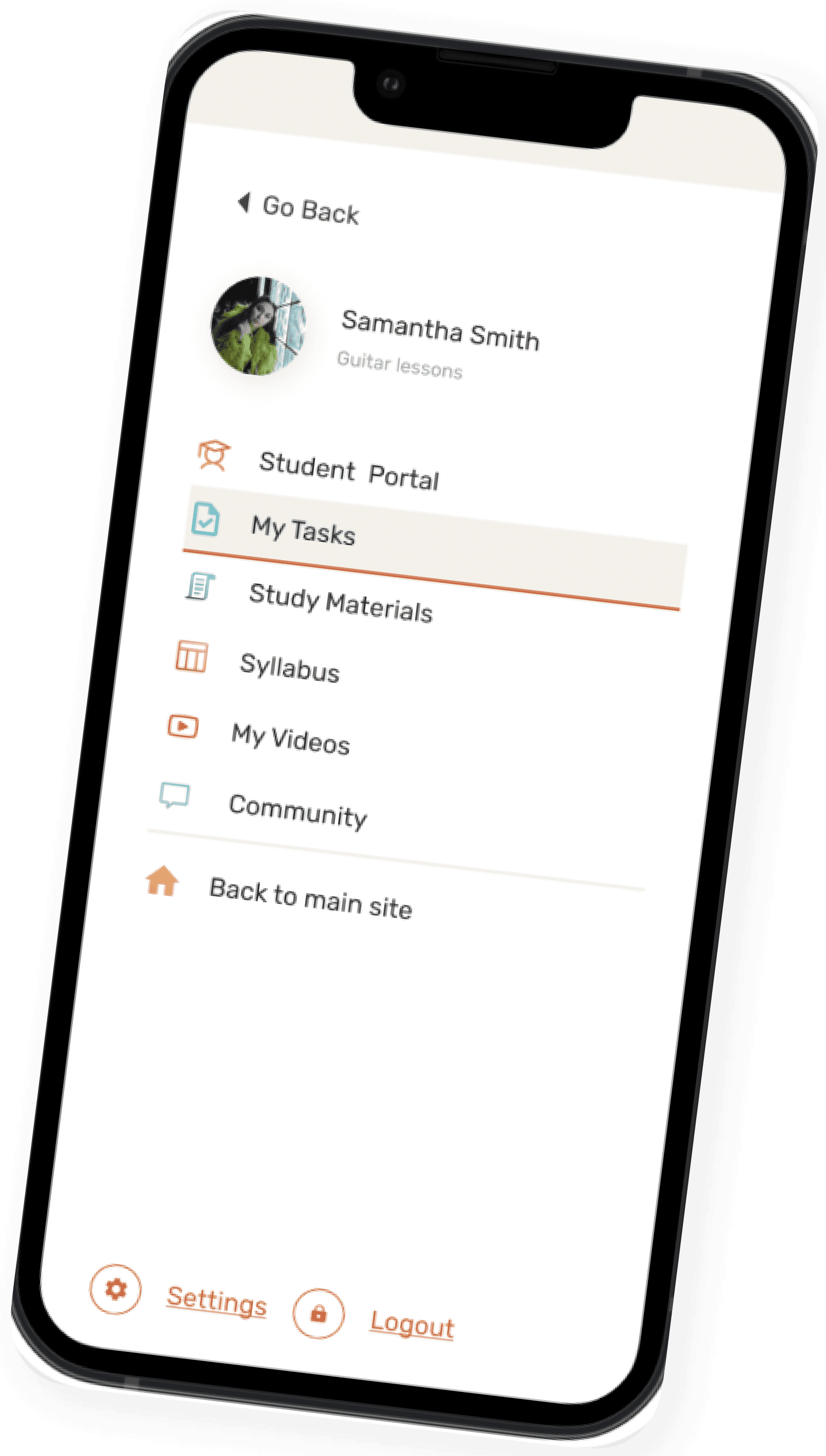
Student portal: Starting with login page, Student details and Progress of how much they finished it
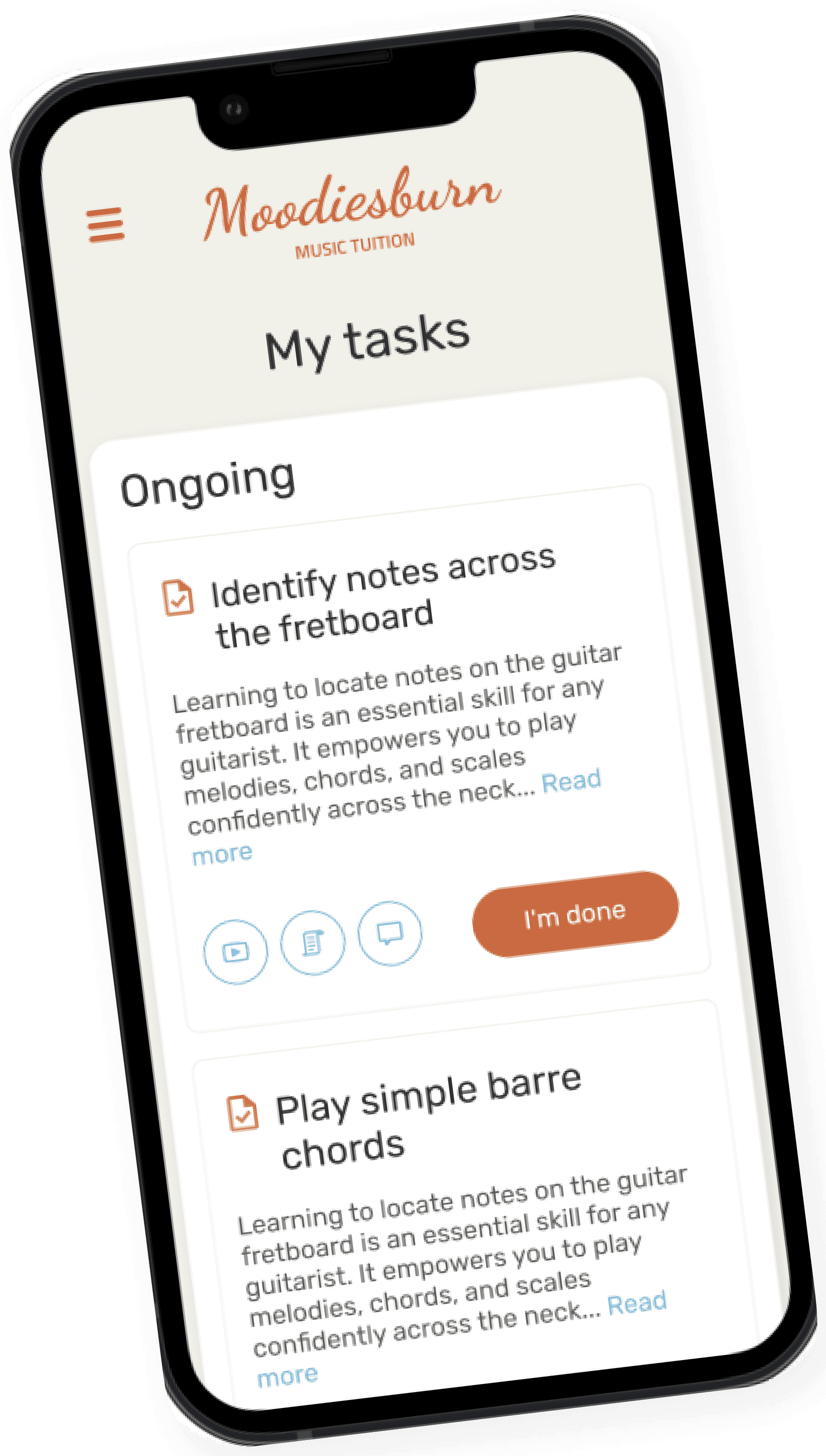
My task: Includes Theory and practical syllabus
Moodboards & Brand Attribute
The brand attributes defined by our stakeholder are: Casual, Cheerful, Musical, Young, Fun.
Our team created a moodboard based on these attributes and tested it with other students. The results we got, were pretty close to expectations.

Moscow Method
Once the problem was well-defined, we started ideating possible new features to enhance Catriona’s experience. The “Moscow Method” was used to help us identify the MVP of the website that would address our problem statement.
Personal student portal with progressive video lessons
videos categorized by difficulties
videos of the teacher playing
Personalised syllabus
Community area to share experiences with other students and arrange jam sessions
collection of music videos
Able to re-schedule a lesson
access to videos and other material
Calendar to see available schedules to book online
Transparent price lists
Testimonials and Reviews (if possible)
Must have
Could have
Should have
Won’t have
Student Success data
Ideate
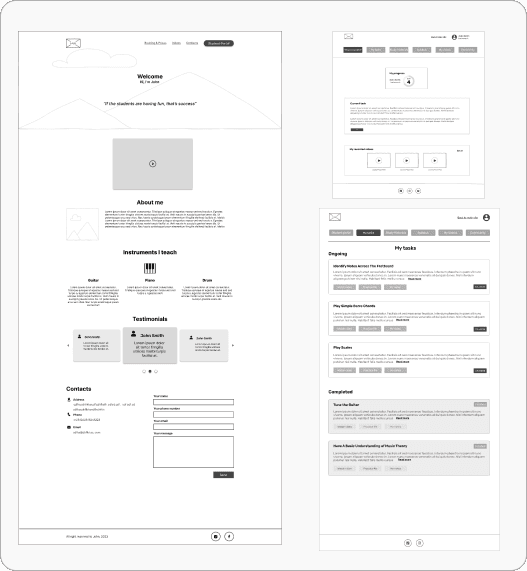
Mid-fi and Usability Testing
After transforming our sketches into a working mid-fi prototype, we organized user and usability testing to understand if we were going in the right direction and if there were any modifications that could be done on this step.
Prototype & Test
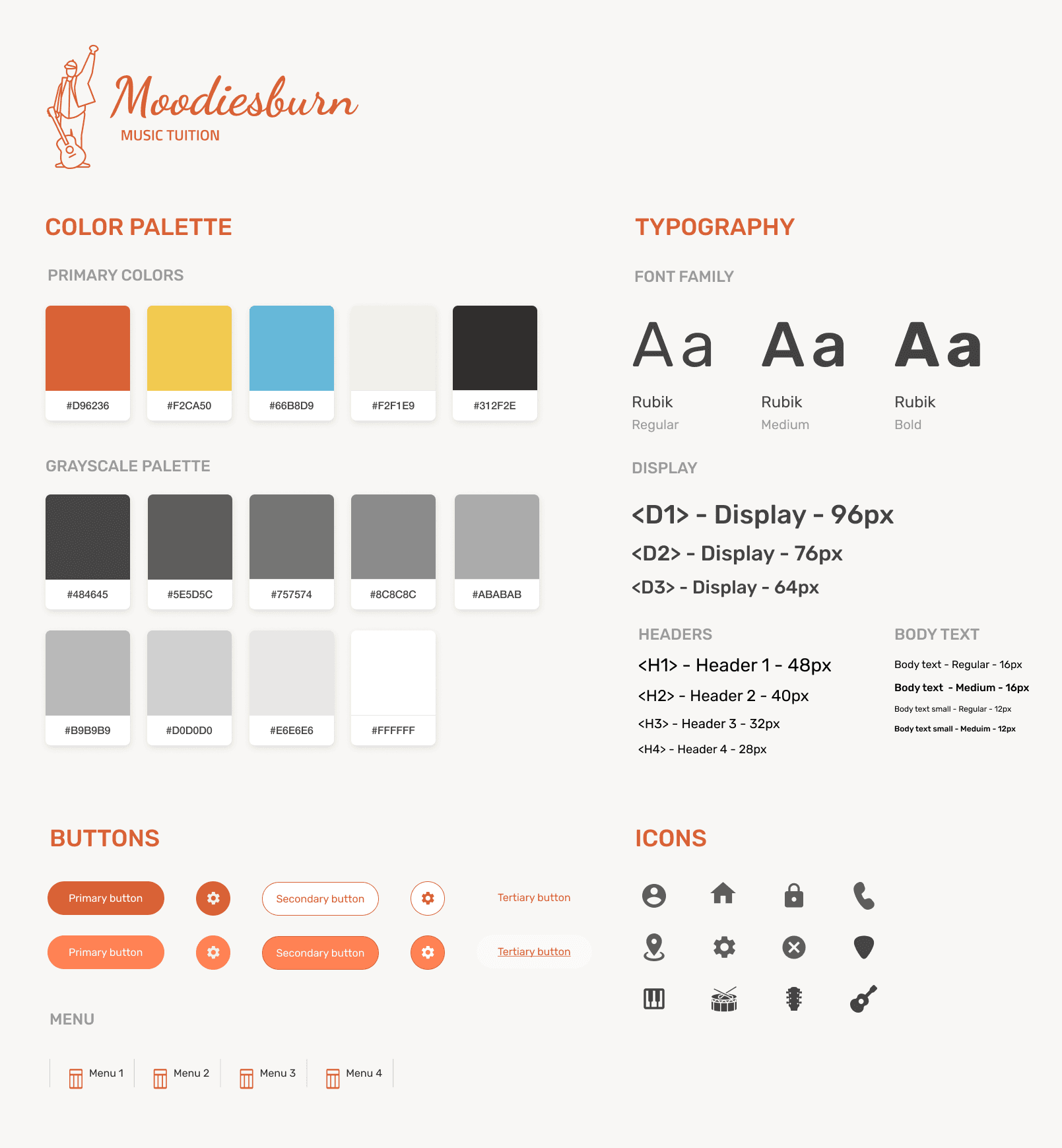
Style Tile
Once it was done, the team unleashed their creativity and started creating a logo, brand identity, color palette, selecting fonts and iconography, etc. All this info we combined into a style tile that you can find below. When the process of style tile creation was over, we started to build the components to speed up high-fi creation and maintain consistency across platforms and devices.
Hi-fi
With a well-defined visual identity established for the brand, we jumped straight into finalizing the designs of our screens. Here’s where the hard work we put into the mid-fi wireframes paid off, making it a lot easier to transition to the high-fidelity version.
Conclusion
My Learning from Ironhack journey are mainly tied to the respectable opportunity to learn from each other and be appreciative about the knowledge and development individually. Opening up about our unique work styles in the beginning definitely set a precedent regarding the next steps over the bridge named user experience design.
As a key learnings, I have learned a lot through the tests. Posing the questionnaire screen a thousand times, learning by listening to the users and making the most correct decision has been the most rewarding part of the project.
Challenge
My amazing team, consisting of Shukrat, Jorge, and Dorottya, were assigned to reach out to a stakeholder, arrange an interview, and explore how UX could enhance the online visibility of our stakeholder’s business.
High-fidelity prototype (MVP version only) Responsive design (1 wireframe only)
Project Overview
In this case study, I will delineate the development procedure for an E-Commerce site. This endeavor concentrated on crafting a flexible website for a regional enterprise or expert who owns an existing website or is creating one.
Details
Roles: UX/UI Designer
Duration: 7 days
Methods: User research: quantitative and qualitative research, Swot analysis, Affinity mapping, Moscow Method, Moodboard, Wireframes, Low fidelity prototyping, High Fidelity prototyping.